
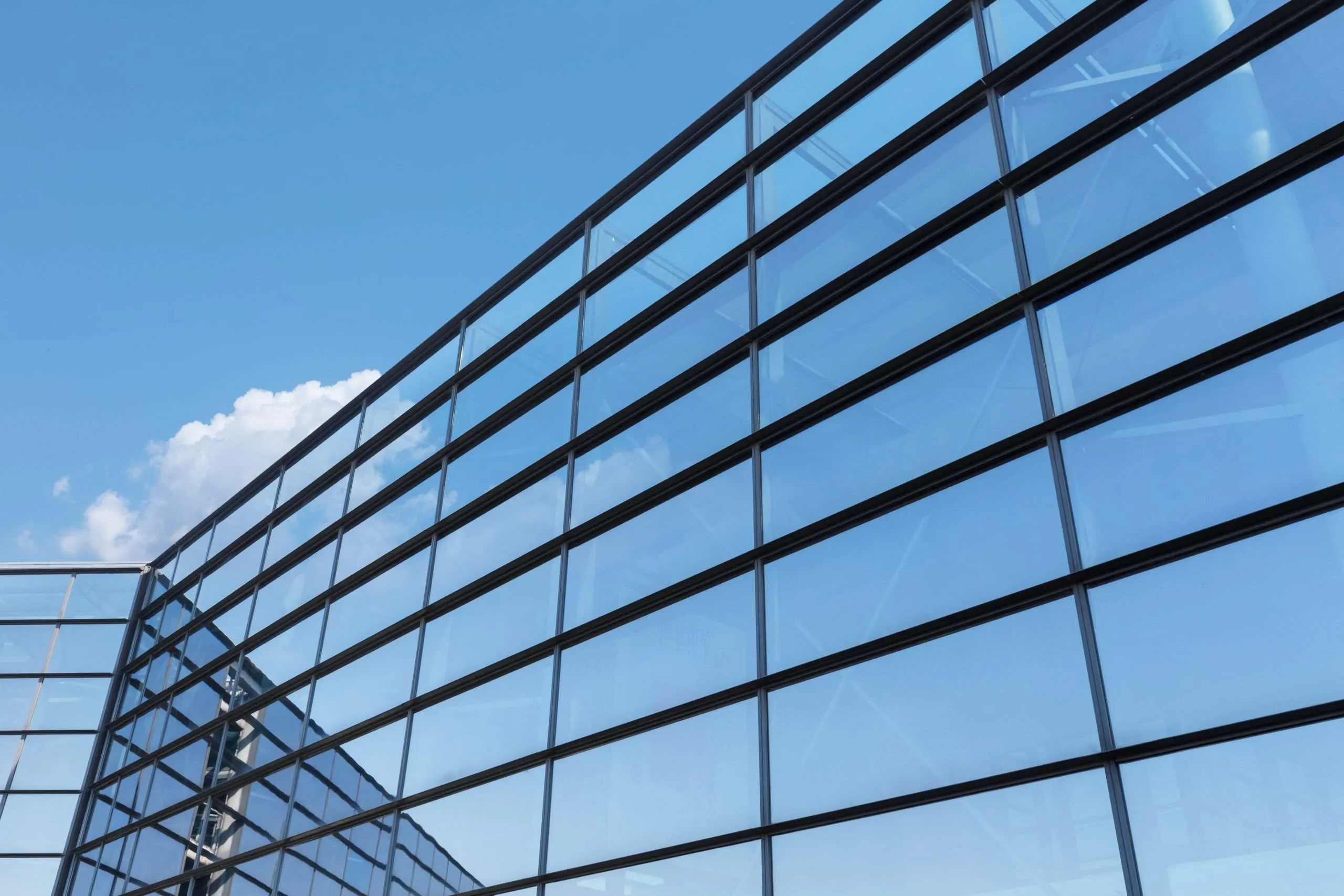
Curtain wall
A curtain wall is a non-structural exterior building enclosure that serves as an outer covering of a building. It is typically composed of lightweight materials, such as aluminum and glass, designed to provide an aesthetically pleasing and energy-efficient solution. Curtain walls are commonly used in modern architecture, offering a sleek and contemporary appearance while allowing for ample natural light to penetrate the building's interior.
The primary function of a curtain wall is to protect the building from the elements, including wind and water, while supporting its own weight and withstanding external forces. Unlike traditional load-bearing walls, curtain walls bear no structural loads, relying on the building's framework for support.
The modular nature of curtain wall systems allows for flexibility in design, enabling architects to create expansive glass facades and unique building shapes. This adaptability also facilitates quick and cost-effective installation.
Beyond aesthetics, curtain walls contribute to energy efficiency by providing thermal insulation and reducing the need for artificial lighting. They often incorporate double-glazed or insulated glass units, improving the building's overall thermal performance.
Curtain walls are widely used in commercial and high-rise buildings, providing a seamless and sophisticated exterior. Their innovative design, combined with energy-saving features, makes them a popular choice in contemporary construction for those seeking a balance between functionality and architectural elegance.